

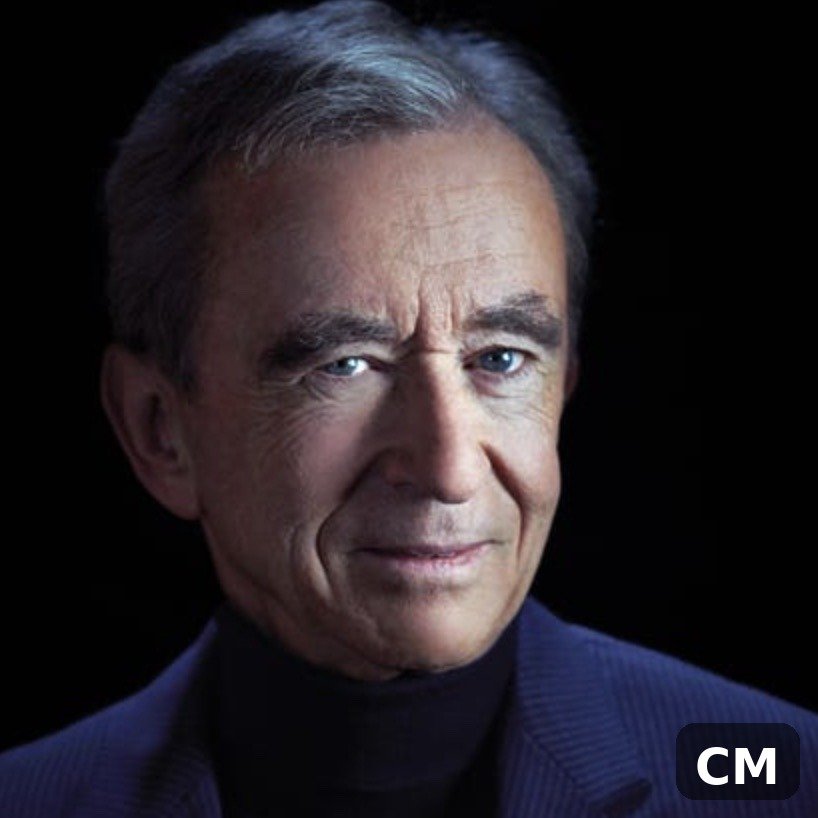
Type two names into Google and an unexpected pairing appears: Bernard Arnault, the French billionaire who built LVMH into the world’s largest luxury empire, and Oliver Zipse, the German engineer who ran BMW for seven years. They are not partners, not rivals, and not relatives — yet people keep searching for them together.
But there is much more to the story than a search-engine coincidence. Arnault grew up in an industrial family in Roubaix, joined his father’s construction business, and then rewrote his destiny through a daring $15 million bet on a bankrupt textile firm that owned Christian Dior. Zipse grew up in Bensheim, studied engineering across two continents, and joined BMW as a humble trainee in 1991 — spending 35 years climbing to the very top.
In this article, we compare Bernard Arnault and Oliver Zipse in full: their childhoods, their educations, their wildly different paths to power, and their wealth. And we answer the question everyone is really asking — what actually connects these two men?
| Bernard Arnault | Oliver Zipse | |
|---|---|---|
| Full Name | Bernard Jean Étienne Arnault | Oliver Zipse |
| Known For | Chairman and CEO of LVMH | Former Chairman of BMW’s Board of Management |
| Birth Year | 1949 | 1964 |
| Age | 77 | 62 |
| Birthplace | Roubaix, France | Heidelberg, Germany |
| Nationality | French | German |
| Profession | Businessman, investor | Engineer, executive |
| Parents | Jean Léon Arnault (industrialist); Marie-Josèphe Savinel (pianist) | Not publicly known |
| Spouse | Hélène Mercier | Married (wife’s name not public) |
| Children | 5 | Two sons |
| Current Status | Chairman and CEO of LVMH | Non-executive director of Airbus |
Where It All Began: Two Childhoods, One Continent
Bernard Jean Étienne Arnault was born on March 5, 1949, in Roubaix — an industrial city in northern France built on textile manufacturing. His childhood world was concrete, cranes, and construction sites rather than catwalks and champagne.
His father, Jean Léon Arnault, was a graduate of the École Centrale Paris who owned the civil engineering company Ferret-Savinel. The firm had been founded by Arnault’s maternal grandfather, Étienne Savinel, and Jean Arnault took the helm after marrying Étienne’s daughter. Young Bernard spent time on the company’s premises, watching operations and absorbing the mechanics of business from an early age.
His mother, Marie-Josèphe Savinel, was a classically trained pianist with what biographers describe as a “fascination for Dior.” She insisted her son take classical piano lessons and filled the household with music and culture — the artistic counterweight to the family’s industrial pragmatism. Years later, Arnault would make Christian Dior, the fashion house his mother had admired, the cornerstone of his empire.
Arnault was raised in a “strict Catholic-Auvergne” style by his devoutly Catholic grandmother and educated at Catholic schools: the Lycée Maxence Van Der Meersch in Roubaix and the Lycée Faidherbe in Lille, a school known for preparing pupils for France’s elite grandes écoles.
Oliver Zipse’s beginnings were quieter but no less instructive. He was born on February 7, 1964, in Heidelberg, the historic university city of Baden-Württemberg. He grew up in Bensheim, a market town in the Bergstraße region of southern Hesse, where he completed his high school education (Abitur) in 1983.
His family environment placed a high value on academic and technical excellence — his brother Hendrik Zipse went on to become a respected chemist and university professor. Southern Hesse’s proximity to some of Germany’s most important engineering and chemicals companies gave Zipse’s formative years a setting where technical achievement was both visible and valued. While Arnault’s childhood blended industry with music, Zipse’s was steeped in the German engineering tradition from the start.
Bernard Arnault’s Education: The Polytechnique Path
In 1971, Arnault graduated from the École Polytechnique — France’s most selective engineering school — with a degree in civil engineering and mathematics. Rather than pursuing a technical career elsewhere, he joined his father’s company straight out of university.
His first years there revealed the boldness that would define him. Arnault persuaded his father to sell off the construction business and pivot into real estate — a radical move years before France’s property boom. The company sold its industrial construction division, was renamed Ferinel, and later became the George V Group, thriving in the timeshare property sector. Arnault became chairman in 1978, gaining full control of the family business at just 29 years old.
A political upheaval changed his plans. In 1981, when France’s Socialist government came to power with tax-the-rich policies, Arnault moved his family to the United States, where he spent three years growing the property business. Navigating the competitive American market sharpened his ambitions — he began searching for an enterprise he could truly scale, ideally, as he later put it, “a business with French roots and international reach.”
Oliver Zipse’s Education: From Utah to Darmstadt
Zipse’s academic journey took an unusual detour. After finishing school in Bensheim in 1983, he spent two years studying computer science and mathematics at the University of Utah in Salt Lake City — an uncommon international step for a German engineering student of his generation, and a hint of the interest in digital systems that would later serve him at BMW. He did not complete a degree there.
Returning to Germany in 1985, he enrolled at the Technische Universität Darmstadt, switching to mechanical engineering, and graduated in 1991 with a Diploma in Engineering (Dipl.-Ing.). TU Darmstadt’s mechanical engineering programme is among the most rigorous in Germany, and the qualification became the foundation of everything that followed.
While already working at BMW, Zipse added an Executive MBA through the joint Kellogg-WHU programme (Kellogg School of Management in the USA and WHU – Otto Beisheim School of Management in Germany), completing it in 1999. He joined BMW the very year he graduated from Darmstadt — walking straight from the classroom onto the factory floor.
Their Paths to Power: The Owner vs. The Trainee
Arnault’s route to the top ran through ownership. In 1984, the bankrupt textile conglomerate Boussac Saint-Frères — which happened to own Christian Dior — was put up for sale. With $15 million from his family’s business, Arnault bought it, sold off the unprofitable divisions, and poured everything into reviving Dior as a luxury house. It was a visionary gamble on a brand others considered finished.
When LVMH was created in 1987 through the merger of Louis Vuitton and Moët Hennessy, Arnault invested and by 1989 had become the group’s majority shareholder — and its Chairman and CEO, a dual role he has held ever since. Acquisitions became his signature: Fendi, Bulgari, and Tiffany & Co. joined a portfolio that now spans more than 75 Maisons across fashion, jewellery, watches, wines and spirits, and selective retail. LVMH reported €80.8 billion in revenue for 2025, making it the largest company by market capitalisation in the eurozone.
Zipse’s route was almost the mirror image. He joined BMW in 1991 as a trainee in development and production. From 1992 to 1994 he worked as a project engineer for technology innovation; from 1994 to 2006 he held leadership functions in development, production, and production planning in Munich and South Africa. In 2007 he became Managing Director of the MINI plant in Oxford, UK, then rose through senior vice president roles in technical planning, corporate planning, and product strategy. He joined BMW’s Board of Management in May 2015, responsible for production, and became its Chairman on August 16, 2019.
As Chairman, Zipse steered BMW through the pandemic, supply-chain shocks, the electric transition, and the launch of the Neue Klasse platform — while holding to a “technology-open” strategy that kept combustion and hybrid options alongside electric vehicles. He stepped down on May 13, 2026, ending a 35-year career, and Milan Nedeljković succeeded him the next day. Zipse later joined the Airbus board as a non-executive director. He had also served as president of the European Automobile Manufacturers’ Association (ACEA) in 2021 and was appointed an honorary professor at the Technical University of Munich in 2022.
What Is the Connection Between Bernard Arnault and Oliver Zipse?
Here is the honest answer: there is no reliable evidence that Bernard Arnault and Oliver Zipse are related, were ever colleagues, or ran a business venture together. Arnault’s world has always been LVMH and luxury; Zipse’s was BMW, from trainee to Chairman, until his departure in 2026.
There is also no major direct corporate alliance between LVMH and BMW that would explain the pairing. The two companies operate in separate sectors, though their industries overlap in luxury marketing, design, and premium consumers.
So why are they searched together? Because their careers form a near-perfect comparison of two models of corporate power. Arnault represents the owner-builder model: authority rooted in investment, ownership, and family control. Zipse represents the career-executive model: authority earned through 35 years of internal promotion inside one of Germany’s most disciplined industrial companies. One bought his way to the top; the other climbed there, rung by rung. Readers who want more profiles of figures who rose from unlikely beginnings will find them among our celebrity and business features.
Bernard Arnault vs. Oliver Zipse: Who Is Richer?
The wealth gap is enormous — but it needs context. Forbes’ real-time ranking estimated Bernard Arnault and family’s net worth at about $137.1 billion in September 2026, making him the 8th richest person in the world. His fortune had fallen by roughly $50 billion since the start of the year as luxury stocks cooled, yet it remains one of history’s great fortunes. Almost all of it is tied to the Arnault family’s ownership interests in LVMH: when the share price moves, his estimated wealth moves by billions.
No reliable net worth figure exists for Oliver Zipse. As a professional executive, he earned compensation under BMW’s executive remuneration system — fixed salary, performance-related pay, long-term incentives, and pension benefits. But salary disclosures do not reveal private investments, property, debts, or savings, so any exact “Oliver Zipse net worth” figure published online should be treated with scepticism.
The real lesson of the comparison is structural: owning a large stake in a great company creates vastly more personal wealth than even the highest executive salary. Arnault’s influence is backed by both ownership and management; Zipse’s BMW influence came from professional executive authority within a formal corporate governance system.
Bottom Line
Bernard Arnault and Oliver Zipse are, in a sense, the two faces of European capitalism. One is the French model: capital, family, and the patient assembly of luxury brands by an owner who answers to almost no one. The other is the German model: engineering excellence, institutional discipline, and a trainee who earned the top job through three and a half decades of service.
Their upbringings explain a great deal. Arnault’s blend of industrial pragmatism and his mother’s artistic refinement foreshadowed a man who would treat businesses as both engineering problems and works of art. Zipse’s immersion in Germany’s technical culture foreshadowed a leader who trusted factories, planning, and process over headlines.
They may never have shared a room, a company, or a conversation. But placed side by side, their lives tell a richer story than either could alone — proof that there is more than one road to the very top.
FAQs
Are Bernard Arnault and Oliver Zipse related?
No. There is no reliable public evidence that they are related. Arnault was born in Roubaix, France, into an industrial family; Zipse was born in Heidelberg, Germany. Their family histories are entirely separate.
Did Bernard Arnault and Oliver Zipse ever work together?
No documented evidence shows that they worked together directly. Arnault’s career has centred on LVMH and luxury goods, while Zipse spent his entire executive career at BMW from 1991 to 2026.
Who is richer, Bernard Arnault or Oliver Zipse?
Bernard Arnault, by an enormous margin. His family’s net worth was estimated at about $137.1 billion in September 2026, tied to LVMH ownership. Zipse has no publicly verifiable net worth; his wealth came from executive compensation at BMW.
Is Oliver Zipse still the CEO of BMW?
No. Zipse stepped down as Chairman of BMW’s Board of Management on May 13, 2026, after 35 years with the company. Milan Nedeljković succeeded him on May 14, 2026.
What does Oliver Zipse do now?
After leaving BMW, Zipse joined the Airbus board as a non-executive director. He remains an honorary professor at the Technical University of Munich and is married with two grown sons.
How did Bernard Arnault get into luxury?
Through investment, not apprenticeship. In 1984 he bought the bankrupt Boussac textile group — which owned Christian Dior — with $15 million from his family’s business, restructured it around Dior, and used it as the foundation for his 1989 takeover of LVMH.
