

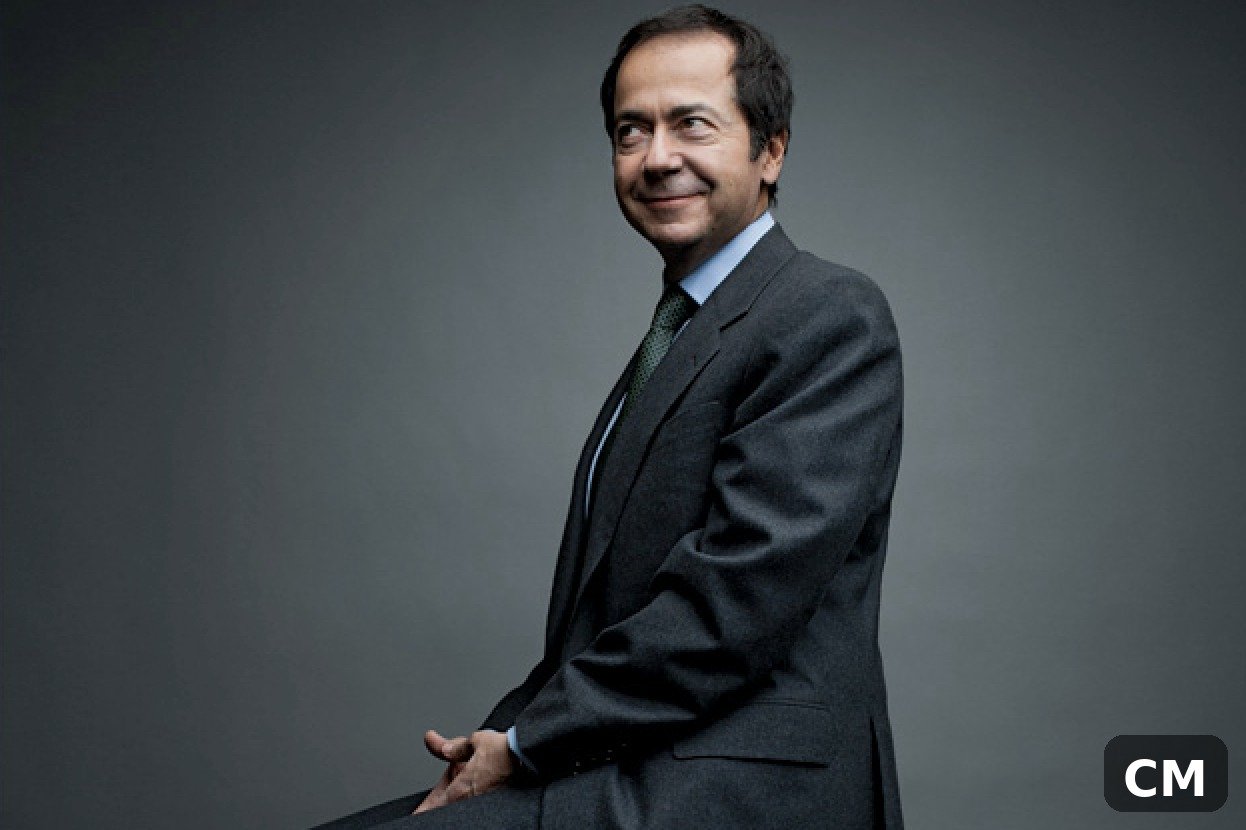
In 2007, John Paulson made one of the boldest bets in financial history — wagering against the American housing market and personally earning nearly $4 billion in a single year. A decade later, Ulf Mark Schneider became the first outsider to run Nestlé in almost a century, steering the world’s largest food company through its most dramatic reshaping in generations.
But there is much more to the story than two résumés. Paulson is the son of an orphaned Ecuadorian immigrant who fought in World War II and a mother descended from Lithuanian and Romanian Jewish immigrants — a Queens kid who climbed to Harvard and then to the top of high finance. Schneider was born in Neuwied, Germany, trained at Switzerland’s elite University of St. Gallen and Harvard Business School, and became a CEO at 37.
People search these two names together for a reason: their careers are a masterclass in how great wealth is actually made — the investor’s once-in-a-generation jackpot versus the executive’s decades-long climb. In this article, we compare John Paulson and Ulf Mark Schneider in full: their upbringings, their paths to power, and their fortunes.
| John Paulson | Ulf Mark Schneider | |
|---|---|---|
| Full Name | John Alfred Paulson | Ulf Mark Schneider |
| Known For | Founder of Paulson & Co.; the 2007 subprime bet | Former CEO of Nestlé and Fresenius |
| Birth Year | 1955 | 1965 |
| Age | 70 | 61 |
| Birthplace | Queens, New York, USA | Neuwied, Germany |
| Nationality | American | German-American |
| Profession | Hedge fund manager, investor | Business executive |
| Parents | Alfred G. Paulson; Jacqueline Paulson (née Boklan) | Not publicly known |
| Spouse | Jenny Zaharia (married 2000; separated 2021) | Not publicly known |
| Children | 3 | Not publicly known |
| Current Status | Runs Paulson & Co. as a family office | Board member of Roche and Siemens |
John Paulson’s Roots: Queens, Ecuador, and Lithuania
John Alfred Paulson was born on December 14, 1955, in Queens, New York City, the third of four children. His family story reads like a condensed history of 20th-century immigration — and it shaped him profoundly.
His father, Alfred G. Paulson (1924–2002), was born Alfredo Guillermo Paulsen in Ecuador, to a father of half-French and half-Norwegian descent and an Ecuadorian mother. Orphaned at fifteen, Alfredo moved to Los Angeles at sixteen with his younger brother Alberto. He enlisted in the US Army, served in Italy during World War II — where he was wounded — and later changed his surname from Paulsen to Paulson. He built a solid professional life at the accounting firm Arthur Andersen and later as chief financial officer of the public-relations firm Ruder Finn.
Paulson’s mother, Jacqueline (née Boklan, 1926–2018), was the daughter of Jewish immigrants from Lithuania and Romania who had settled in New York City. She met Alfredo while they were both students at UCLA. From his father, Paulson inherited an appetite for risk and reinvention; from his mother, a connection to one of America’s great immigrant traditions.
Academically, Paulson was exceptional. He earned his bachelor’s degree from New York University in 1978 and an MBA from Harvard Business School in 1980 — the same dual credential that would later appear, remarkably, on Ulf Mark Schneider’s own résumé.
Ulf Mark Schneider’s Roots: Neuwied and the German School System
Ulf Mark Schneider was born on September 9, 1965, in Neuwied, Germany, a Rhineland town on the river Rhine. (Some low-quality websites wrongly list his birthday as September 20 and his birthplace as Frankfurt — his official Siemens supervisory-board biography confirms September 9, Neuwied.)
Unlike Paulson, whose family history is richly documented, Schneider keeps his private life firmly private. Details of his childhood and parents have never been made public — a discretion he has maintained throughout his career. What is known is that he holds both German and American nationality, becoming a US citizen in 2003, and that his education was world-class.
Schneider studied finance and accounting at the University of St. Gallen in Switzerland — one of Europe’s most prestigious business schools — earning his Licentiate degree in 1988 and a doctorate in economics (Dr. oec.) in 1992. He then earned an MBA from Harvard Business School in 1993, graduating with distinction. Like Paulson, he combined a European formation with an American business-school polish — a combination that would define his entire career as a transatlantic executive.
The Bet of the Century vs. The Healthcare Turnaround
Paulson’s path to prominence ran through Wall Street’s back rooms. After Harvard, he worked at the Boston Consulting Group, then at Odyssey Partners, then in mergers and acquisitions at Bear Stearns, and at Gruss Partners. In 1994, he founded Paulson & Co. with $2 million — $1 million of it his own money — starting as a merger-arbitrage specialist.
Then came the trade that made him a legend. In 2007, convinced the US subprime mortgage market was a bubble, Paulson used credit default swaps to bet against it. When the market crashed, he personally earned nearly $4 billion in a single year — a sum that transformed him, in the words of one profile, “from an obscure money manager into a financial legend.” He has been called “one of the most prominent names in high finance,” and in 2010 he earned another $4.9 billion. In 2020, he converted Paulson & Co. into a family office, and he remains its president and portfolio manager. On the personal front, he married Jenny Zaharia in 2000; the couple separated in 2021, and they have three children.
Schneider’s rise was the opposite of a single jackpot: it was a twenty-year construction project. From 1989 to 2001 he held leadership positions at the Franz Haniel & Cie. group in Duisburg, including a stint as chief financial officer of Gehe UK plc in Coventry, England. In 2001 he joined Fresenius as CFO of Fresenius Medical Care — and in 2003, at just 37 years old, he became CEO of the entire Fresenius Group.
Over thirteen years at Fresenius, Schneider transformed a sleepy German hospital operator into a stock-market darling through more than 30 acquisitions, including HELIOS Kliniken, Renal Care Group, and APP Pharmaceuticals. Revenue, employees, and net income all grew dramatically, and Fresenius became one of the world’s leading diversified healthcare companies.
The Nestlé Years: The Outsider Who Reshaped a Giant
In June 2016, Nestlé stunned the business world by appointing Schneider as its CEO — the first outsider to lead the company since 1922. He took the role in January 2017, after joining the previous September for a handover period alongside then-CEO Paul Bulcke.
Schneider moved fast. He shifted capital spending into higher-growth categories — coffee, pet food, baby food, water, and consumer health — while divesting slower-growth businesses including US confectionery, North American ice cream, and mass-market bottled water brands. On the acquisition side, he led more than 50 deals that transformed 12% of the company’s portfolio, including Atrium Innovations, Blue Bottle Coffee, Sweet Earth Foods, and the $7.15 billion deal for Starbucks’ retail brand rights.
His tenure was not without pressure. Activist investor Dan Loeb of Third Point — not Paulson — took a large Nestlé stake in 2017 and pushed for faster divestments, including the L’Oréal holding. Schneider responded with a $21 billion share buyback and kept reshaping the portfolio. He stepped down at the end of 2024, succeeded by Laurent Freixe, and has since taken non-executive roles: he has been a director of Roche Holding since 2023 and joined the supervisory board of Siemens AG in February 2025.
Is There a Connection Between John Paulson and Ulf Mark Schneider?
Here is the honest answer: there is no documented personal or business connection between John Paulson and Ulf Mark Schneider. They have never worked at the same company, never run a joint venture, and no credible record places them in the same deal.
One clarification matters, because it is a common source of confusion: the activist investor who pressured Nestlé during Schneider’s tenure was Dan Loeb of Third Point, who disclosed a $3.5 billion stake in 2017 and met with Schneider to push for asset sales. John Paulson had no such role at Nestlé.
So why pair them? Because together they illustrate the two great engines of modern wealth. Paulson represents the investor’s path: concentrated risk, a contrarian bet, and a fortune made in a single historic trade. Schneider represents the executive’s path: elite education, operational mastery, and wealth accumulated over decades of running ever-larger companies. For more profiles of self-made figures and the forces that shaped them, explore our celebrity and business features.
Who Is Richer: John Paulson or Ulf Mark Schneider?
John Paulson, by an enormous margin — and the reason is ownership. Forbes estimated Paulson’s fortune at $11.2 billion as of October 2026, when he made headlines with a record $250 million donation to the Hebrew University of Jerusalem, whose Mount Scopus campus will be renamed in his honour. (Forbes’ estimate has fluctuated over the years — it stood at $3.8 billion in August 2025 — because it tracks the value of his investments and holdings.) His wealth is tied to the capital he risked and compounded as an investor.
Schneider’s wealth is far more modest and far less documented. CEO Today has estimated his net worth at approximately $38 million, built on executive compensation — his Nestlé pay package was reported at around $11 million a year — plus private assets that are not publicly disclosed. No audited figure exists, and salary disclosures never reveal the full picture of savings, investments, property, or debts.
The structural lesson mirrors the Arnault-Zipse comparison: owning the capital creates a different order of wealth than managing it, however brilliantly. Paulson bet his own money and kept the upside; Schneider earned one of Europe’s top executive salaries and invested it. Both are rich by any ordinary measure — but only one made the billionaire lists.
Bottom Line
John Paulson and Ulf Mark Schneider began life on different continents, in different decades, in different circumstances — a Queens boy from an immigrant family and a Rhineland boy who guarded his privacy. Yet both ended up at the summit of global finance, and both passed through the same Harvard classrooms along the way.
Their upbringings left fingerprints on everything that followed. Paulson’s father — the orphaned Ecuadorian teenager who reinvented himself in America — modelled exactly the kind of audacious reinvention his son would perform on Wall Street. Schneider’s rigorous German-Swiss education modelled the discipline of the professional manager: patient, analytical, and built for the long run.
There is no partnership between them, no shared boardroom, no secret deal. But as a study in how fortunes are made — the jackpot and the climb — few pairings teach more.
FAQs
Are John Paulson and Ulf Mark Schneider related?
No. There is no evidence they are related. Paulson was born in Queens, New York, to an Ecuadorian-born father and a mother of Lithuanian-Romanian Jewish descent; Schneider was born in Neuwied, Germany.
Did John Paulson and Ulf Mark Schneider ever work together?
No. Paulson’s career has been in hedge funds and investing through Paulson & Co., while Schneider’s has been in corporate management at Fresenius and Nestlé. No credible record connects them professionally.
Who is richer, John Paulson or Ulf Mark Schneider?
John Paulson, by a vast margin. Forbes estimated his fortune at $11.2 billion in October 2026, while Schneider’s net worth is estimated at roughly $38 million — built from executive compensation rather than investment ownership.
What is John Paulson famous for?
His 2007 bet against the US subprime mortgage market, which earned him nearly $4 billion in a single year and made him, in one profile’s words, “a financial legend.” He founded Paulson & Co. in 1994 and converted it to a family office in 2020.
Is Ulf Mark Schneider still CEO of Nestlé?
No. Schneider led Nestlé from January 2017 to the end of 2024 — the first outsider CEO since 1922 — and was succeeded by Laurent Freixe. He now sits on the boards of Roche Holding and Siemens AG.
What did Ulf Mark Schneider do before Nestlé?
He was CEO of the German healthcare group Fresenius from 2003 to 2016, transforming it through more than 30 acquisitions, and before that CFO of Fresenius Medical Care and an executive at the Haniel Group.
